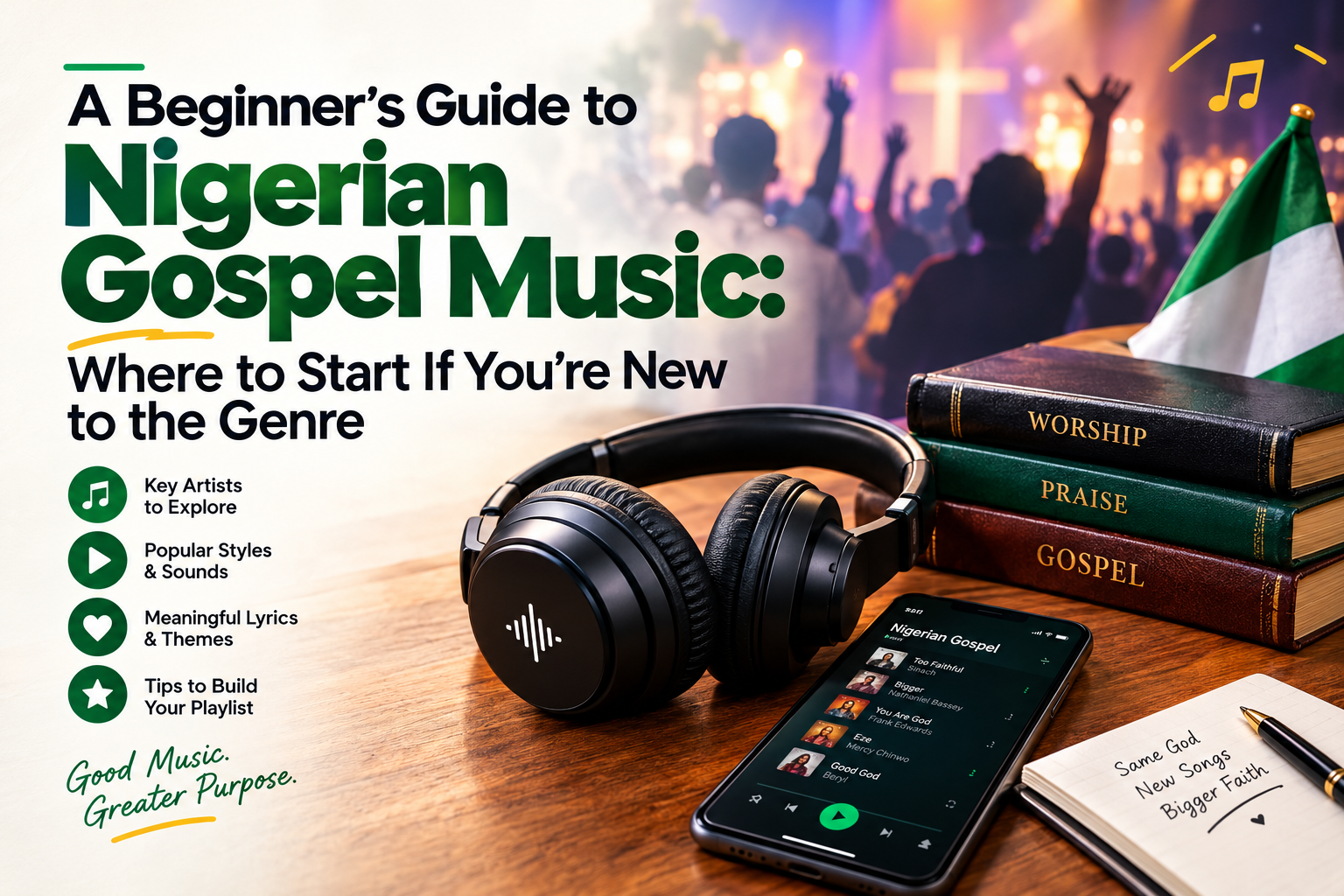
A Beginner's Guide to Nigerian Gospel Music (Where to Start in 2026)
BY GMUSICVIBES EDITORIAL
Published Oct 8, 2026
Every few weeks someone sends me
a message that goes something like this: "I keep hearing these songs at
church and on TikTok, but I don't know where to begin. Who should I listen to
first?"
It's a fair question. Nigerian
gospel music is huge right now. It fills stadiums, tops streaming lists, and
gets sung by congregations in Houston and Manchester who can't pronounce half
the Yoruba lyrics but sing them anyway. For a newcomer, all of that can feel
like walking into a family party where everyone already knows each other.
So this is the guide I wish
someone had handed me years ago. No long list of 200 names. Just the sounds,
the people and the songs that will help you make sense of the genre, and a few
honest tips on how to actually enjoy it.
First, What Makes Nigerian Gospel Different?
If you grew up on American
gospel or Hillsong-style worship, Nigerian gospel will feel familiar in some
places and completely new in others. Three things stand out.
The drums come first.
Much of the music is built on the same rhythms you hear in highlife, juju and
Afrobeats. When a Nigerian choir says "praise," they mean dancing.
Nobody stands still.
The languages mix freely.
A single song might move between English, Yoruba, Igbo, Pidgin and Efik within
three minutes. You don't need to understand every word. The feeling carries it,
and you'll pick up phrases faster than you expect.
Songs are made to be sung
together. A lot of Nigerian gospel is written for the congregation, not
just the stage. That's why so many of the big songs are simple, repetitive and
easy to join in on. It isn't lazy songwriting. It's by design.
The Main Styles You'll Come Across
You don't need to memorise
genres, but knowing the rough map helps you figure out what you like.
1. High-energy praise
This is the music of Sunday
praise sessions and wedding receptions. It's fast, loud and full of
call-and-response. Moses Bliss and Mercy Chinwo have hits in this lane, and
much of the Yoruba praise tradition sits here too.
2. Worship and "soaking" music
Slower, longer and more
reflective. Songs here can run 10 or 15 minutes, with the worship leader
singing spontaneously in between. Nathaniel Bassey, Dunsin Oyekan and Victoria
Orenze are the names you'll hear most. This is what people play during quiet
time, long drives or late-night prayer.
3. Afro-gospel
Gospel lyrics on an Afrobeats or
Afropop production. Frank Edwards helped open this door years ago, and today
it's one of the fastest-growing corners of the genre. If you mainly listen to
secular Nigerian pop, this is probably your easiest way in.
4. Indigenous and traditional gospel
Songs sung mostly in Yoruba,
Igbo or other Nigerian languages, often rooted in older church and cultural
sounds. Tope Alabi is the big name in Yoruba gospel, and Chinyere Udoma is a
favourite in Igbo gospel. This is the music many Nigerians grew up hearing from
their parents' cassette players.
A Very Short History (So the Names Make Sense)
Nigerian gospel didn't start
with Spotify. Church choirs and hymn writers were recording long before most of
today's stars were born. By the early 1970s, names like Bola Are and Ebenezer
Obey were making Christian music that ordinary people bought and played at
home.
Evangelist Bola Are formed her
group, Bola and Her Spiritual Singers, in 1973, and she's still honoured today
as one of the pillars of Yoruba gospel. Around the same period, Panam Percy
Paul from Adamawa State began building a career that would earn him the title
many people still use for him: the father of Nigerian gospel music. His song
"Bring Down the Glory" is still sung in churches decades later.
Then came the 2000s and 2010s,
when artists like Sinach, Frank Edwards and Tim Godfrey took the sound to new
places, and social media did the rest. Today, Nigerian acts sit comfortably
among the most streamed gospel artists in Africa. On Spotify's 2024 list for
Sub-Saharan Africa, Nathaniel Bassey came in second, with Moses Bliss, Dunsin
Oyekan, Sunmisola Agbebi and Mercy Chinwo also making the top 10.
(I'll be doing a full history
piece soon, from cassette tapes to billions of streams. Keep an eye out for it.)
Seven Artists to Start With
If you only have time for a
handful of names, make it these. Together they cover almost every sound in the
genre.
•
Sinach. Start here, honestly. She wrote
"Way Maker," which has been sung in churches around the world and covered
by some of the biggest names in American worship music. Her songs are easy to
learn and theologically solid.
•
Nathaniel Bassey. A trumpeter and worship leader
best known for the Hallelujah Challenge, a midnight online worship session that
began in 2017 and now draws huge crowds every year. Great if you like slow,
deep worship.
•
Mercy Chinwo. A powerhouse voice. Her songs mix
English and Igbo, and she moves easily between joyful praise and emotional
worship.
•
Moses Bliss. Upbeat, catchy and consistent. If you
want gospel you can play in the car with the windows down, he's your man.
•
Tope Alabi. The queen of Yoruba gospel. Even if
you don't speak Yoruba, listen to how she builds a song. It's a masterclass.
•
Frank Edwards. The producer-artist who made
gospel sound modern. Good bridge for anyone coming from Afrobeats.
•
Victor Thompson. The newer generation. His song
"Dependable God" has been one of the defining worship songs of the
last two years. (I wrote about his whole story here.)
10 Songs to Play First
Here's a starter playlist. I've
tried to mix old and new, praise and worship, so you get a feel for the full
range.
•
"Way Maker" by Sinach. The Nigerian
gospel song the whole world knows.
•
"Bring Down the Glory" by Panam Percy
Paul. A classic. Listen to understand where it all came from.
•
"Baba Kuse" by Bola Are. From her 1977
debut, and still sung today. Pure Yoruba gospel history.
•
"Onise Iyanu" by Nathaniel Bassey. A
Yoruba phrase meaning "miracle worker." Slow, reverent and beautiful.
•
"Excess Love" by Mercy Chinwo. One of
the most loved Nigerian worship songs of the past decade.
•
"Bigger Everyday" by Moses Bliss.
Joyful, simple, and you'll be singing it by the second chorus.
•
"Nara" by Tim Godfrey featuring Travis
Greene. A Nigerian-American collaboration that crossed over in a big way.
•
"Dependable God" by Victor Thompson.
Modern worship with a medley structure that churches love.
•
"No Turning Back II" by Gaise Baba and
Lawrence Oyor. One of the songs Nigerian churches can't stop singing in
2026.
•
"Oluwatosin" by Tkeyz featuring Steve
Hills. Nigeria's most-searched song on Google in 2025. Yes, a gospel song.
Play them in that order and
you'll hear roughly fifty years of the genre in under an hour.
Where to Actually Listen
Streaming apps. Spotify,
Apple Music, Boomplay and Audiomack all carry Nigerian gospel. Search for
"Nigerian gospel" playlists and let the algorithm learn from what you
save. Boomplay is especially strong for Nigerian catalogues.
YouTube. A lot of
Nigerian gospel lives here as full live recordings, and honestly, many songs
sound better live than in the studio. Watching a worship leader and a thousand
people singing together tells you more about this music than any article can.
Live events. If you're in
Nigeria, go at least once. The Hallelujah Challenge in 2026 ran from February 9
to 28, with a festival at Tafawa Balewa Square in Lagos. The Experience in
Lagos is another one, a massive annual gospel concert. You'll understand the
genre differently after you've been in that crowd.
Your local church.
Seriously. Pay attention to what your worship team sings. Ask them what they're
listening to. Worship leaders are usually the first to know what's coming next.
A Few Honest Tips for Beginners
•
Don't skip the long tracks. A 12-minute worship
song isn't padding. The best moments often come after the seventh minute, when
the leader goes off-script.
•
Look up the lyrics. Especially for Yoruba and
Igbo songs. Knowing that a line means "You are the God who never
fails" changes how you hear it.
•
Try both praise and worship before deciding.
Lots of people hear one fast song, decide it's "too noisy," and miss
out on the quieter side completely. Or the other way round.
•
Follow the songwriters, not just the singers.
Many hits you love were written by people you've never heard of. Following them
leads you to great music.
•
Give it two weeks. Some of these songs don't
grab you on the first listen. By the fourth, you'll be humming them in the
shower.
Frequently Asked Questions
Who is the most popular Nigerian gospel artist?
It depends on how you measure
it. For global reach, Sinach is hard to beat because of "Way Maker."
On streaming platforms, Nathaniel Bassey, Mercy Chinwo and Moses Bliss are
consistently near the top.
Do I need to understand Yoruba or Igbo to enjoy it?
Not at all. Plenty of songs are
fully in English, and the ones that aren't usually have translations online.
Many non-Nigerians sing along to Yoruba choruses without knowing the words at
first.
What's the difference between praise and worship songs?
In Nigerian church culture,
praise usually means upbeat songs of celebration and thanksgiving, with
dancing. Worship means slower, more intimate songs focused on reverence. Most
services have both.
Is Afro-gospel still gospel?
Some older Christians debate
this, but most listeners today see Afro-gospel as a natural part of the genre.
The message is the same. Only the beat has changed.
Where to Go From Here
Start with the ten songs. Save
the ones you like. Follow two or three of the artists. Within a month you'll
have your own favourites, and you'll probably disagree with some of my picks,
which is exactly how it should be.
And if you want to know what
churches are singing right now, check out my list of the top gospel songs
Nigerian churches are singing in 2026. It's the natural next step after this
one.
What was the first Nigerian
gospel song that really got to you? Tell me in the comments. I read every one.
Discussion (0)
No comments yet. Be the first to share your thoughts!