How a Song Written in Lagos Ended Up in Every Church on Earth
BY GMUSICVIBES EDITORIAL
Published Jun 16, 2026
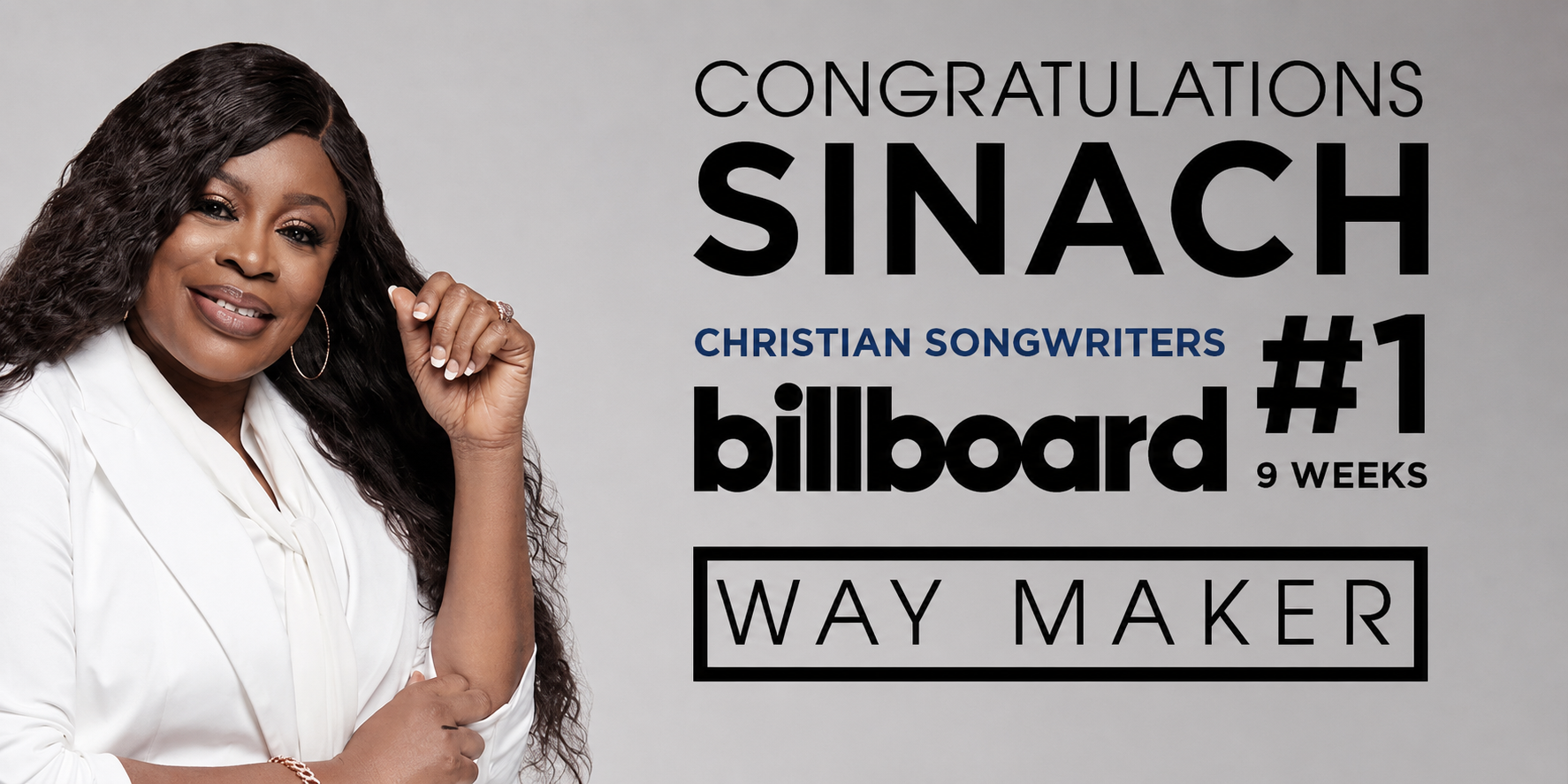
A deep dive into Sinach's Way Maker — the most covered worship
song of the decade.
There's a moment most gospel
music fans remember — the first time they truly heard Way Maker. Not just
listened. Heard.
For some people it was in a
church service somewhere in Lagos or Abuja, maybe 2016 or 2017, when the song
was still mostly a Loveworld thing. For others it was during the lockdown,
scrolling through a phone at 2am, when the world had gone genuinely quiet and
terrifying, and somebody's livestream worship session had this song playing and
it just... landed.
That's the thing about Way
Maker. It didn't arrive the way most big worship songs arrive — with a label
push, radio blitz, and conference rollout. Rather than rising to popularity
through sponsored advertisements, Way Maker emerged in the most grassroots way
a song can these days: a YouTube video. And from that one video, something
unusual happened that the gospel music world is still trying to fully explain.
Who Is Sinach, Actually?
Before we talk about the song,
we should talk about the woman — because her story is part of why the song
resonates the way it does.
Sinach has written over 1,000
songs in her entire discography, with her first solo album 'Chapter One'
released in 2008. She's a senior worship leader at Christ Embassy (Loveworld)
in Lagos, and for years she was enormously well-known within African
Pentecostal circles while remaining almost invisible to the Western Christian
music industry. That invisibility wasn't for lack of talent. It was just how
the industry worked — or didn't work — across borders.
What's interesting is that
Sinach's ministry was meaningful long before the white North American church
sang her songs. Her music is powerful with or without that affirmation. She
wasn't waiting for American validation. She was just writing songs. And one of
them happened to be Way Maker.
The Song Itself
Way Maker was released as a
single on 30 December 2015. Sinach has shared in interviews that she wrote it
during a personal season of faith — a moment where she had to choose to believe
in God's promises before she could see any evidence of them moving. The song
came out of that place. Not out of a studio formula. Out of actual wrestling
with God.
That origin matters because you
can feel it in the lyrics. There's nothing clever or polished about them. 'You
are here, moving in our midst / I worship you, I worship you.' Simple, direct,
almost childlike. But the kind of simple that takes honesty to write, not
laziness.
The song started gaining
traction in Nigerian churches first, then gradually across Africa. By 2018 it
had started showing up in church worship sets internationally. And then 2019
happened.
Leeland Changed Everything
Way Maker grew more popular in
2019 when the band Leeland released a version, and that cover introduced the
song to a much wider American evangelical audience. Leeland's version had a
different texture — more polished production, the kind of sound that fits
comfortably on Christian radio — and it worked. Leeland's version received more
than 67 million streams, with the video getting over 27 million views.
But even that wasn't the real
tipping point.
March 2020
Way Maker was the answer almost
everywhere at once.
Way Maker's top Sunday was
March 22, 2020, with nearly 7% of all worship presentations including the song
— and it went on to become the top worship song of the entire year, based on
Faithlife's report of more than 2.2 million uses of its Proclaim software.
Numerous hospitals played the
song from their rooftops to their parking lots, taking a few moments to pray
for those impacted by the virus and to honour healthcare workers on the front
lines.
Think about that image for a
second. A song written in Lagos, by a Nigerian woman in her quiet time with
God, blasting from hospital rooftops in America during a pandemic. That's not a
music industry story. That's something else entirely.
The Cover Flood
Michael W. Smith released his
version in February 2020, just as the pandemic was beginning, and it caught
fire. His version held the number one spot on Billboard's Christian Airplay
chart for 12 weeks in a row — and Sinach became the first female to hold that
songwriter spot, ever.
After Smith's version, the
covers kept coming. More than 60 recording artists covered the song, including
Leeland, Michael W. Smith, Mandisa, Bethel, Passion featuring Kristian
Stanfill, Kari Jobe and Cody Carnes, and eventually Revere featuring Darlene
Zschech and William McDowell.
Churches translated it into
over 60 languages. Sinach herself wrote that Way Maker had become 'a theme song
sung in many languages to bring hope and faith to many in distress.'
And through all of it, Sinach's
response was remarkably calm. When fans worried that Michael W. Smith would
overshadow her authorship, she told CNN Africa that she was thrilled when
artists could introduce her work to their audiences: 'The joy of a writer is
that when you write a song, the whole world will sing it, because the song is
really not about you.'
That's not something you say
for PR. That's someone who actually means it.
The Credit Question
There is one uncomfortable
corner of this story that deserves a mention.
While white evangelicals were
just adopting the song in 2020, it had been loved by black churches for several
years. By removing Sinach's name and story from the song, some congregations
were claiming it as their own without crediting the vibrant context it came
from.
This wasn't a new phenomenon —
it's a pattern as old as popular music itself. But it stings a little
differently when it happens in the church, a place that should know better. The
good news is that enough voices pushed back loudly enough that many
congregations became more deliberate about attribution. When you sing Way Maker
now, most worship leaders know exactly who wrote it.
And they should. Because the
story behind the song is part of the song.
What Made It Work
If you step back and ask the
honest question — why this song, why not any of the hundreds of other worship
songs released the same year — a few things stand out.
The lyrics don't promise that
your situation will change. They declare that God is present whether things
change or not. 'Even when I don't see it, You're working.' That line is doing
heavy theological lifting in very plain language, and it lands because it's
true to how faith actually works. Most people aren't living in miracles.
They're living in the waiting. Way Maker speaks to the waiting.
The melody is also deceptively
simple. Anyone can sing it. You don't need to be a trained vocalist, you don't
need to know the bridge perfectly, you don't need a band. You can sing it alone
in a car at night and it still works. That accessibility is not an accident —
it's what makes a song travel.
And maybe most importantly:
Sinach wasn't writing for a global market. She was writing for her
congregation, from her own experience. And somehow, that specificity is exactly
what made it universal.
Ten Years On
Way Maker's official music
video has reached over 210 million views on YouTube. The song hit the top spot
in the CCLI Top 100 in June 2020 and has been covered by more than 60
well-known Christian recording artists. It won Song of the Year at the 51st
Annual GMA Dove Awards. Sinach became the first African artist to top the
Billboard Christian Songwriters chart.
But the number that means the
most isn't on any chart. It's the one you can't count — the number of people
who heard that song at exactly the right moment. In a hospital room. On a
lockdown afternoon. At a funeral. During a season that felt like it had no
exit.
Way Maker found them.
That's what good gospel music
does. It doesn't just entertain — it locates people in the dark and reminds
them they're not alone. Sinach, in a Loveworld rehearsal room in Lagos sometime
before 2015, wrote something that would do exactly that for millions of people
she will never meet.
Not a bad legacy for a quiet
moment with God.
What's
your earliest memory of Way Maker? Drop it in the comments — I'd genuinely love
to know.
Discussion (0)
No comments yet. Be the first to share your thoughts!